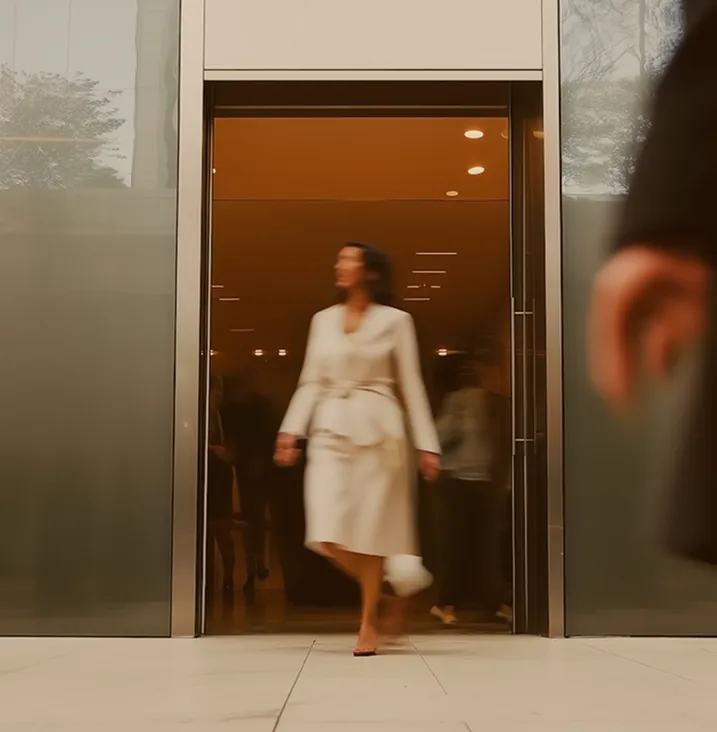
How to Design Meaningful Digital User Journeys
Learn how clear navigation, thoughtful UX, accessibility and performance can create digital journeys that are easier to use and more effective.

Table of contents
Key takeaways
- People remember how a product made them feel, not how it looked — clarity beats decoration.
- Talk to real users before opening a design tool; where they hesitate tells you the one thing the product has to get right.
- Map the whole path from first click to final action, so no step leaves someone guessing what happens next.
- Accessibility and speed are design decisions from day one, not a cleanup pass before launch.
- Launch is where the learning starts — real behaviour keeps reshaping the journey.
Introduction
Most people don't remember a website for its animations or its colour palette. They remember how it made them feel. Did it help them get something done, or did it get in their way? A meaningful digital journey is simply one that respects the person on the other side of the screen. It is clear about where to go next, honest about what to expect, and easy for anyone to use. That is what we set out to build, every single time.
Start With the Person, Not the Page
Before we open a design tool, we try to understand who we're designing for and what they are actually trying to do. We talk to real users, watch where they hesitate, and pay attention to the words they use to describe their problem. Those small details tell us far more than any assumption could. They keep the design grounded in real needs instead of guesswork, and they often reveal the one thing the product really has to get right. It is the first stage of any UI/UX design project, and the part that most often gets cut for time.
Map the Journey Before You Build It
A good experience feels effortless because someone thought hard about the path behind it. We map every step from the first click to the final action, looking for dead ends, confusing choices, and moments where people might quietly give up. When the flow is predictable, users never have to stop and wonder what will happen if they press a button. They just keep moving toward what they came to do. UI/UX Design That Turns Ideas into Interaction walks through what that mapping looked like on a live delivery app.
Clarity Over Cleverness
It is tempting to make an interface look impressive. It is harder, and far more valuable, to make it obvious. We lean on clean layouts, readable type, and a clear visual hierarchy so the most important thing on every screen is also the easiest to find. Familiar patterns, plain language, and generous spacing do the quiet work of guiding people. Good design points the way; it does not ask anyone to figure it out.
Designed for Everyone
Accessibility is not a checkbox we tick at the end. It is part of how we design from the very start. Proper colour contrast, keyboard navigation, sensible labels, and content that works with a screen reader mean more people can use the product comfortably, including those on slow connections or small screens. When you design for the edges, the experience gets better for everyone in the middle too.
Build It to Feel Fast
Speed is part of the experience, not an afterthought. A page that loads quickly and responds the instant someone taps feels trustworthy, while a slow or janky screen quietly chips away at confidence. We keep pages light, load images sensibly, and make sure interactions stay smooth on real devices and everyday networks, not just on a fast office connection. Most of that work sits in web development rather than in the design file, which is why the two have to be planned together.
Let the Results Tell the Story
Once a product is live, the real learning begins. We watch how people actually behave, where they convert and where they stall, and use what we find to refine the journey. A short survey, a heatmap, or a simple drop-off chart often points straight to the next improvement. Meaningful design is never finished. It is shaped over time by the people who use it.
Closing Thought
Designing meaningful digital journeys comes down to empathy backed by craft. When clear interfaces, predictable flows, fast performance, and genuine accessibility come together, you get more than a polished website. You get an experience people trust, return to, and happily recommend to others.
Frequently asked questions
What is a digital user journey?
It is the full path a person takes through a product, from the page they land on to the action they came to complete. Mapping it means writing down every step, decision and dead end along the way, so the design answers the whole path instead of one screen at a time.
How do you know whether a user journey is working?
Watch what people actually do. Drop-off points in analytics, session recordings and a short question at the moment someone abandons a flow will show you where the journey breaks. When people hesitate in the same place repeatedly, that step is the problem.
Does designing for accessibility slow a project down?
Not when it is part of the design from the start. Colour contrast, keyboard navigation, sensible labels and readable content cost very little while the interface is still being designed. Retrofitting them into a finished build is what gets expensive.
Is page speed a design problem or a development problem?
Both. Design decides how many images, fonts and effects a page has to carry; development decides how efficiently they load. A journey that feels slow will be judged as a bad experience regardless of which side caused it.
Have a Digital Project in Mind?
Let's turn your idea into a digital experience that works for your users and your business.
Looking to build something similar?
From strategy and UI/UX to development, KavalaTech helps businesses turn ideas into practical digital experiences.
Explore services